Blockhaus d'Éperlecques – Nord-Pas-de-Calais


Profile
Blockhaus d’Éperlecques: From Nazi V-2 Launch Site to Historical Museum
Introduction
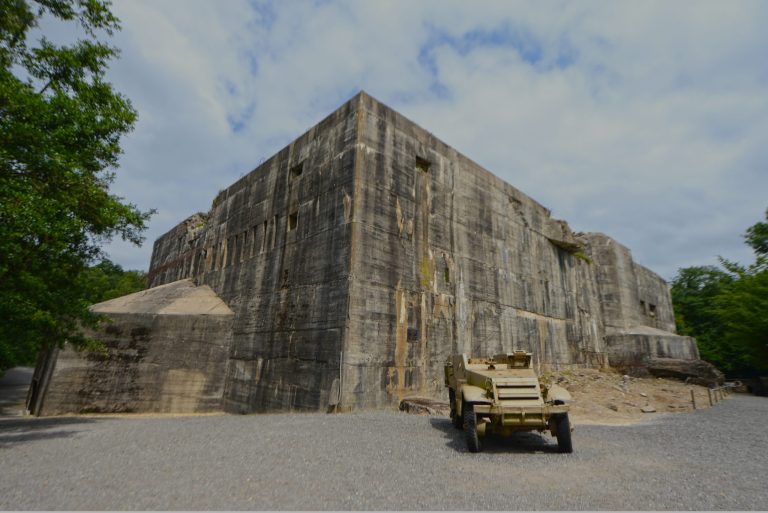
The Blockhaus d’Éperlecques, also known as the Watten Bunker, is a massive World War II-era bunker located near Saint-Omer in the Pas-de-Calais region of northern France. Constructed by Nazi Germany between March 1943 and July 1944 under the codename Kraftwerk Nord West (Powerplant Northwest), the facility was intended as a launch site for V-2 ballistic missiles targeting London and southern England. Today, it serves as a museum, offering insights into the wartime history and technological advancements of the era.
Design and Purpose
The bunker was designed to accommodate over 100 V-2 missiles at a time and to launch up to 36 daily. The facility was to include a liquid oxygen (LOX) production plant and a bomb-proof railway station to facilitate the delivery of missiles and supplies from production facilities in Germany. The structure was planned to be constructed using 120,000 cubic meters of reinforced concrete, making it one of the largest bunkers built during the war.
Construction
Construction began in March 1943, overseen by Organisation Todt, using forced labor comprising thousands of prisoners of war and conscripted workers. The site was strategically chosen for its proximity to the Calais-Saint-Omer railway line, the canalized River Aa, and existing infrastructure, which facilitated the transportation of materials and equipment.
Despite the massive scale of the project, the construction faced significant challenges. Allied reconnaissance identified the site early on, leading to repeated bombing raids that caused substantial damage and hindered progress. The most notable attack occurred on August 27, 1943, when 187 B-17 bombers targeted the site, causing significant delays and damage.
Allied Bombing and Abandonment
The continuous Allied bombing campaigns, particularly as part of Operation Crossbow, rendered the bunker unusable for its intended purpose. The attacks caused extensive damage, and the Germans eventually abandoned the site as a launch facility. Instead, part of the bunker was repurposed for use as a liquid oxygen production plant. The facility was captured by Allied forces in early September 1944.
Post-War Period and Preservation
After the war, the true purpose of the Blockhaus d’Éperlecques was not immediately understood. It wasn’t until later investigations that its role in the V-2 missile program was fully recognized. In 1973, the site was opened to the public as a museum, and in 1986, it was designated a historical monument by the French government.
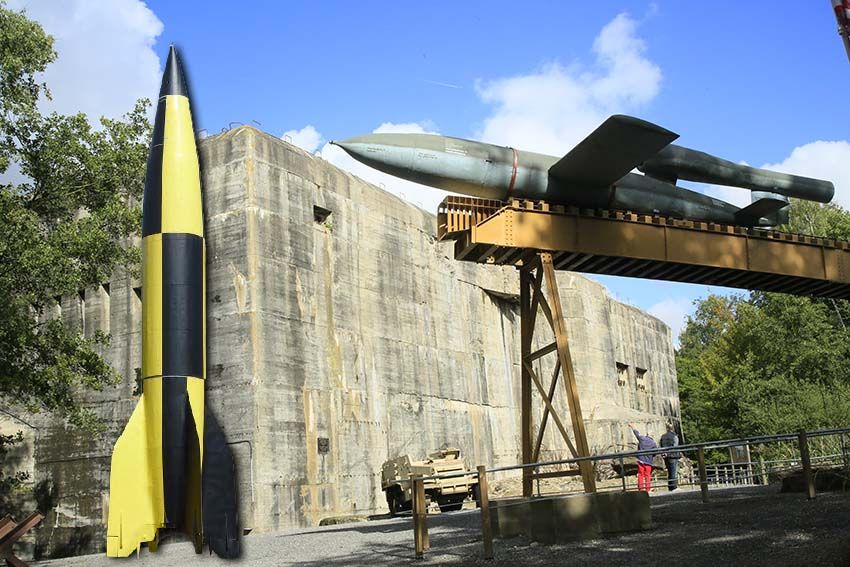
Today, the museum offers visitors a comprehensive look into the history of the site, the V-2 missile program, and the broader context of World War II. Exhibits include a V-1 flying bomb on a launch ramp, various military equipment, and informative displays detailing the construction and intended use of the bunker.
Conclusion
The Blockhaus d’Éperlecques stands as a testament to the ambitious military engineering projects undertaken during World War II and serves as a poignant reminder of the war’s impact. Its preservation as a museum ensures that future generations can learn about this significant chapter in history.


Map
Sorry, no records were found. Please adjust your search criteria and try again.
Sorry, unable to load the Maps API.