Blockhaus d'Éperlecques - Bunker of Éperlecques


Profile
Blockhaus d’Éperlecques
Overview
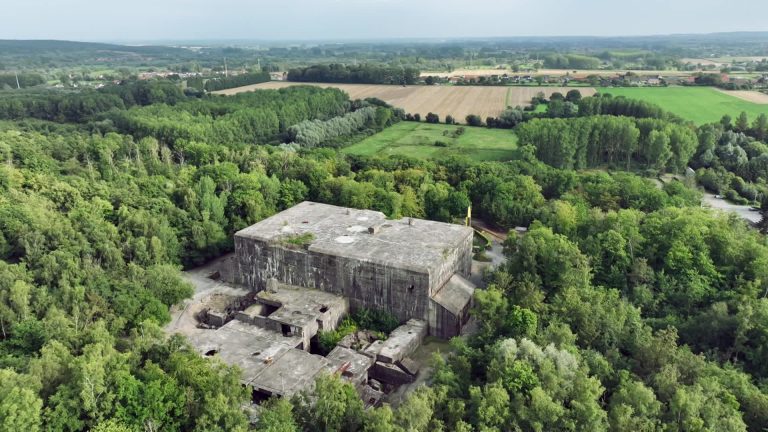
The Blockhaus d’Éperlecques, also known as the Watten bunker, is a massive World War II Nazi bunker located in the northern Pas-de-Calais département of France. Built between March 1943 and July 1944, it was originally intended to serve as a massive launch facility for V-2 rockets directed against London and southern England. It was designed to accommodate over 100 missiles at a time and launch up to 36 daily.
The Blockhaus now serves as a museum and memorial, classified as a Monument historique by the French government in 1985. This enormous concrete structure stands as one of the largest remnants of Hitler’s “Atlantic Wall” defense network.
Construction and Design
Construction began in March 1943 under the codename Bauvorhaben 21 (Building Project 21). The Todt Organisation supervised the project, employing approximately 35,000 workers, many of whom were forced laborers from Eastern Europe and Soviet prisoners of war. The appalling working conditions led to the deaths of many workers.
The bunker’s design was ambitious. Its reinforced concrete roof measured 5.5 meters (18 ft) thick, designed to withstand bombing raids. The main building was 28 meters (92 ft) high with a footprint of 215 meters (705 ft) by 85 meters (279 ft). The completed facility would have included:
- Liquid oxygen production facilities
- Hydrogen peroxide storage vaults
- Underground living quarters
- Workshops
- Storage areas for V-2 components
- Assembly hall
- Launch platform
Allied Discovery and Bombing
British intelligence discovered the site through aerial reconnaissance in April 1943. The facility’s exceptional size and extensive clearing of surrounding forests made it impossible to disguise. The RAF conducted air raids on the site from August 1943, as part of Operation Crossbow, a campaign against V-weapon sites.
On August 27, 1943, the bunker was targeted in Operation Hydra by 187 RAF bombers. This raid employed 2,000-lb “Tallboy” earthquake bombs specifically designed by Barnes Wallis to destroy hardened structures. While failing to destroy the bunker entirely, the bombing significantly damaged it and convinced the Germans to abandon it as a launch site.
Conversion and Later Use
Following the bombing, the Germans modified their plans, converting the structure into a liquid oxygen factory to supply mobile V-2 launch sites. They also reinforced the damaged portions of the structure with additional concrete.
The bunker was captured on September 4, 1944, by Canadian and British forces. Though never used to launch V-2 rockets as intended, it did serve as a storage and distribution center for V-2 fuel and materials.
Post-War Period
After the war, the bunker was abandoned and neglected for decades. In 1969, residents of Watten and Éperlecques purchased the site to preserve its historical significance. The Blockhaus underwent restoration and was opened to the public as a museum in the 1970s.
In 1985, the French government designated it a Monument historique. Today, it serves as a memorial to those who suffered and died during its construction and a reminder of the technological developments of World War II.
Technical Specifications
- Total area: About 2 hectares (4.9 acres)
- Main bunker dimensions: 215 m × 85 m (705 ft × 279 ft)
- Height: 28 m (92 ft)
- Roof thickness: 5.5 m (18 ft) of reinforced concrete
- Concrete used: Over 200,000 cubic meters
- Estimated workers: 35,000
As a Museum
The Blockhaus d’Éperlecques museum contains:
- Historical exhibits about V-weapons
- Information about forced labor during Nazi occupation
- Original equipment displays
- A V-1 flying bomb
- A replica V-2 rocket
- Memorials to the forced laborers who died during construction
The site receives approximately 50,000 visitors annually and has been featured in several documentaries about World War II fortifications and Nazi technical developments.
Historical Significance
The Blockhaus represents several important aspects of World War II history:
- Nazi Germany’s desperate attempts to develop “wonder weapons” to turn the tide of war
- The use of forced labor in the Third Reich
- The Allied intelligence and bombing campaign against V-weapon sites
- The technological race that would later influence post-war rocket development and the Space Race
The facility stands as a sobering reminder of the Nazi regime’s brutal labor practices and technological ambitions. Though never fully operational as intended, it remains one of the largest and most intimidating military structures built during World War II in Europe.
Location and Access
The Blockhaus is located near the village of Éperlecques, approximately 15 km (9.3 miles) northwest of Saint-Omer in northern France’s Pas-de-Calais region. The site is accessible to the public and open throughout the year, with additional guided tours available during summer months.
Legacy
Today, the Blockhaus d’Éperlecques stands as one of Europe’s most important World War II historical sites. Its preservation allows future generations to understand the technological developments, military strategies, and human costs of the conflict. The site complements other V-weapon related historical locations in northern France and serves as a powerful educational resource about the war’s impact on the region.


Map
Sorry, no records were found. Please adjust your search criteria and try again.
Sorry, unable to load the Maps API.