Tirpitz / Blåvand Bunker Museum


Profile
Tirpitz Museum
Overview
The Tirpitz Museum (Danish: Tirpitz Museet), also known as the Blåvand Bunker Museum, is a remarkable historical and cultural institution located in Blåvand on the western coast of Jutland, Denmark. The museum occupies a former World War II German bunker and has been transformed into an architecturally stunning exhibition space. The facility houses significant exhibitions focusing on the Atlantic Wall defense system, the rich history of Denmark’s west coast, and an impressive amber collection. The museum represents a unique blend of military history, natural history, and innovative modern architecture.
History
The Original Bunker
The Tirpitz Bunker began construction in 1944 during the German occupation of Denmark. It was conceived as part of the extensive defense network surrounding the strategic port city of Esbjerg. The bunker was designed as a formidable gun battery that would house two turrets, each equipped with two 38 cm SK C/34 naval guns—massive artillery pieces capable of firing shells weighing up to 800 kg over distances of more than 40 kilometers.
Construction was still underway when Germany surrendered in May 1945, and as a result, the bunker was never completed or operationalized. The massive concrete structure stood as an abandoned relic of World War II for decades afterward, a stark reminder of the occupation and the Atlantic Wall fortification system that stretched from Norway to the Spanish border.
Transformation into a Museum
After the war, the abandoned bunker remained a curious landmark on the Danish coast. Eventually, local authorities decided to repurpose the structure as a small museum, allowing visitors to explore the bunker and learn about its intended military purpose. This initial museum was modest in scale and primarily focused on the bunker itself.
Modern Redevelopment
A significant turning point came in 2012 when ambitious plans were approved to completely reimagine and expand the museum. The renowned Danish architectural firm Bjarke Ingels Group (BIG) was selected to design the new museum complex. This decision represented a bold artistic vision that would transform the stark military structure into an innovative cultural destination.
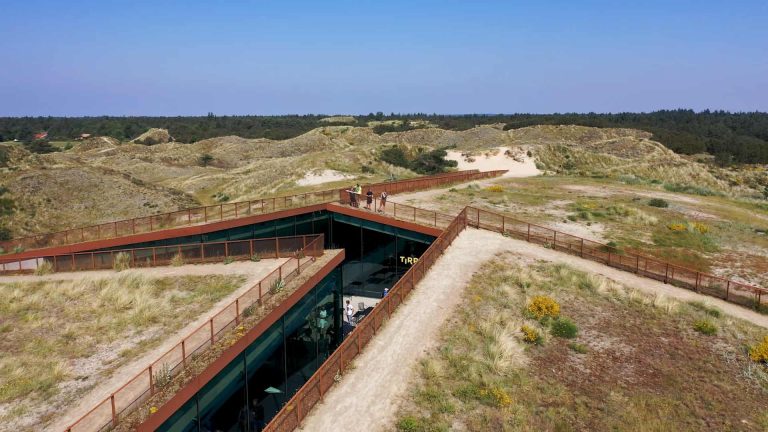
The architectural concept developed by BIG was revolutionary—instead of building a conventional structure, they designed a largely invisible museum that would be integrated into the surrounding sand dunes. Four geometric concrete cuts in the landscape create a series of subterranean spaces that connect to the original bunker while allowing natural light to flood the exhibition areas.
The permanent exhibitions within the new museum spaces were designed by the Dutch experience design agency Tinker Imagineers, known for their immersive and narrative-driven approach to museum installations.
Grand Opening
After years of development and construction, the reimagined Tirpitz Museum was officially unveiled on June 29, 2017. The opening ceremony was prestigious, attended by Frederik, Crown Prince of Denmark, and the Danish Minister of Culture, marking the national significance of this new cultural institution. The museum quickly gained attention both for its historical collections and its groundbreaking architectural design.
Exhibition Spaces
The museum features four distinct exhibition areas, three of which are permanent installations. Each space is designed to offer visitors a different perspective on the region’s history and natural treasures.
An Army of Concrete
This permanent exhibition focuses on the Atlantic Wall—the extensive system of coastal defenses and fortifications built by Nazi Germany between 1942 and 1944 along the western coast of Europe. The exhibition not only explains the technical and military aspects of these fortifications but also shares personal stories from local residents who lived in the shadow of these concrete structures during the occupation. Through multimedia presentations, artifacts, and interactive displays, visitors gain insight into everyday life during wartime and the impact of the occupation on coastal communities.
West Coast Stories
This exhibition takes visitors on a journey through 20,000 years of history along Denmark’s west coast. It explores the geological formation of the landscape, the earliest human settlements, maritime traditions, and the changing relationship between the land and sea over millennia. The exhibition uses innovative storytelling techniques to bring this lengthy history to life, showing how the harsh coastal environment shaped the culture and livelihoods of those who made their homes there.
Gold of the Sea
This permanent installation houses the largest collection of amber in Denmark. Often called “gold of the sea,” amber has been harvested from the shores of the Baltic and North Seas for thousands of years. The exhibition showcases spectacular amber specimens of various sizes, colors, and forms, including rare pieces containing preserved insects and plant materials from millions of years ago. The display explains the geological origins of amber, its cultural significance throughout history, and the important role it played in trade networks stretching across ancient Europe.
Non-permanent Exhibition Space
The museum also includes a dedicated area for rotating temporary exhibitions. The first such exhibition focused on the dangerous work of mine clearance along Denmark’s beaches following World War II. This particular exhibition featured props and sets from the 2015 Danish-German film “Land of Mine” (Under Sandet), which portrayed the controversial use of German prisoners of war—many of them teenage boys—to clear mines from Danish beaches after the occupation ended.
The Original Bunker
In addition to the new exhibition spaces, visitors can still explore the original bunker structure. The massive concrete fortification offers a visceral connection to the war years. One of the most striking features is a glass reconstruction of the artillery guns that would have been installed had the bunker been completed. This installation helps visitors visualize the intended military capacity of the structure and understand its strategic purpose.
Architectural Design
The Tirpitz Museum is internationally recognized for its innovative architectural approach. Rather than competing with or overshadowing the original bunker, BIG’s design complements and contrasts with the heavy concrete fortification. The new structure is largely built into the dunes, creating a harmonious relationship with the surrounding landscape.
Four intersecting geometric cuts in the dunes create a series of underground spaces that surround an open courtyard. These cuts allow natural light to penetrate deep into the museum while also creating dramatic sightlines that connect the exhibition spaces to the landscape beyond. The walls are constructed of concrete cut with a sawing technique that reveals the aggregate material within, creating textured surfaces that reference the surrounding sand.
The contrast between the new museum and the original bunker is intentional and powerful—where the bunker is closed, heavy, and imposing, the new spaces are open, light-filled, and welcoming. This architectural dialogue between old and new, between war and peace, enhances the visitor experience and underscores the museum’s narrative of transformation and historical reconciliation.
Cultural Significance
The Tirpitz Museum has rapidly become an important cultural landmark in Denmark. It represents a thoughtful approach to preserving difficult historical heritage while creating a forward-looking cultural institution. The museum attracts visitors interested in military history, natural history, architecture, and Danish cultural heritage, serving as both an educational resource and a tourist destination.
The museum’s approach to presenting multiple narratives—military history alongside natural history and cultural exhibitions—creates a rich, multifaceted visitor experience. This integrated approach helps contextualize the bunker within the broader historical and environmental landscape of Denmark’s west coast.
Furthermore, the architectural transformation of the site demonstrates how military structures can be repurposed in ways that acknowledge their dark origins while creating new positive cultural spaces. The Tirpitz Museum has been cited as an exemplary case of sensitive adaptive reuse of militaristic architecture.
Visitor Information
The Tirpitz Museum is located near the town of Blåvand in western Denmark, approximately 7 kilometers west of Oksbøl. It is accessible by car and public transportation, with parking available on site. The museum is open year-round, with extended hours during the summer tourist season.
The facility is designed to be accessible to visitors of all abilities, with level entries and elevators providing access to all exhibition areas. Guided tours are available in multiple languages, and interactive digital guides help visitors explore the exhibitions at their own pace.
Adjacent to the museum is a café offering refreshments and light meals, often featuring locally sourced ingredients. A museum shop sells books, crafts, amber jewelry, and other souvenirs related to the exhibitions.
Legacy and Reception
Since its opening, the Tirpitz Museum has received widespread acclaim for both its architectural design and its curatorial approach. It has been featured in numerous architectural publications and has received several awards for its innovative design concept.
The museum serves as an important reminder of Denmark’s experience during World War II while also celebrating the natural beauty and cultural heritage of the west coast region. Its transformation from a symbol of occupation and war to a place of education, reflection, and cultural exchange represents a powerful statement about historical reconciliation and the repurposing of military infrastructure for peaceful ends.
The Tirpitz Museum has become a model for other similar projects throughout Europe, demonstrating how sensitive architectural intervention can create meaningful dialogue between past and present, between painful history and hopeful future.


Map
Sorry, no records were found. Please adjust your search criteria and try again.
Sorry, unable to load the Maps API.