Stalin's Bunker


Profile
Stalin’s Secret Command Center: A Hidden Fortress Beneath Moscow
Construction of a covert command bunker for the Supreme Commander-in-Chief, Joseph Stalin, began quietly in the 1930s. As geopolitical tensions escalated and the world edged closer to the outbreak of the Second World War, the Soviet Union launched a sweeping state initiative to fortify its internal defenses. This underground complex was a key component of that initiative—a top-secret stronghold designed to protect Stalin and the Soviet high command in the event of an attack on Moscow.
At the time, Soviet infrastructure projects often served dual purposes. A metro station doubled as an air-raid shelter. A tractor factory could be quickly repurposed to build tanks. Even a macaroni plant had the capacity to produce gunpowder. Secrecy was paramount, and the construction of Stalin’s bunker was no exception. To conceal the subterranean operation, a massive sports complex was built above ground to mask the activity below. According to legend, Hitler had forbidden the Luftwaffe from bombing stadiums, making the disguise even more effective.
However, once the bunker was completed in 1938, all construction on the sports facility abruptly ceased—its true purpose having been fulfilled.
The Birth of Metro-2 and the Underground Empire
Stalin’s Bunker was just one piece of a much larger, secretive underground network known as Metro-2—a classified system of tunnels and facilities operating beneath the official Moscow Metro. By the beginning of World War II, the length of these secret tunnels actually surpassed that of the public subway lines.
Stalin’s bunker was directly linked to the Kremlin via a 17-kilometer underground road, allowing the Soviet leadership to move discreetly and securely beneath the capital. Reinforced with 6 to 8 meters of concrete on the walls and ceilings, the facility was designed to withstand even the most aggressive bombing raids.
Strategic Location and a Critical Decision
The bunker was strategically located in the eastern part of Moscow—on the far side of the city from where an advancing enemy would most likely approach. This placement gave Stalin a crucial advantage: time to escape. Nearby were three military airfields that could be used for a swift evacuation if necessary.
Yet despite its security and strategic positioning, Stalin remained largely committed to staying at the Kremlin during the war. He used the bunker only once, in December 1941, when German forces had reached the outskirts of Moscow. In that moment of crisis, Stalin, along with Marshal Zhukov and other senior military commanders, convened in the underground shelter to make one of the most pivotal decisions of the war: whether to evacuate the capital or make a stand and defend it.
They chose to stay. The rest is history.
Preserved in Time: A Glimpse into the Past
Unlike many other wartime facilities, Stalin’s secret command center has been remarkably preserved. The interior remains intact, offering a rare window into the past. Visitors today can explore rooms that have remained unchanged for decades—including:
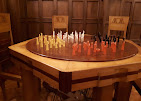
- The Session Hall, known for its dramatic acoustics and imposing architecture
- Stalin’s personal office, preserved as it was when he worked there
- A Georgian-style dining room, reflecting the dictator’s homeland and personal taste
- General staff rooms, echoing with the memory of decisions that shaped history
Artifacts on display include some of Stalin’s personal belongings, lending a tangible connection to one of the 20th century’s most formidable—and controversial—figures.
A Journey Beneath the Surface
Today, the former bunker operates as a museum and historical site, offering visitors a unique, immersive experience into a hidden world of Soviet history. Beyond the political weight of the space, the visit is a striking reminder of the lengths to which governments will go to protect power—and the immense effort required to keep such secrets buried.
In a city teeming with monumental architecture and visible history, Stalin’s Bunker remains a powerful symbol of the shadowy strategies and subterranean realities of war.


Map
Sorry, no records were found. Please adjust your search criteria and try again.
Sorry, unable to load the Maps API.