Hospital in the Rock - Sziklakórház Atombunker Múzeum


Profile
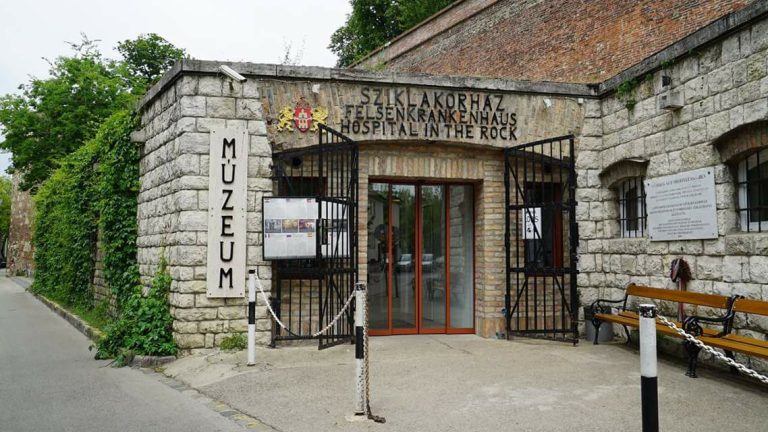
The Hospital in the Rock Nuclear Bunker Museum is located under the Buda Castle in Budapest, Hungary, and occupies a facility that spans over 2,300 m². During World War II and the 1956 Hungarian Revolution, the facility was used as an emergency hospital. During the Cold War, it was classified as a top-secret “civil defense hospital” under the code name LOSK 0101/1. The facility was only opened to the public as a museum in 2008, after the secrecy was lifted.
The museum is home to Hungary’s largest wax figure exhibition, which presents the history of the hospital, the development of military medicine, and displays civil defense tools and equipment. The exhibition was created with the help and oversight of the Hungarian National Museum of Military History, the National Directorate General for Disaster Management, the Budapest Civil Protection Directorate, and St. John’s Hospital. In June 2016, two new permanent exhibits were added to the museum: one dedicated to the Siege of Budapest in 1944-45, and another titled I am Death, the Destroyer of Worlds, which highlights the horrors of nuclear warfare. In June 2017, an exhibition on the atomic bombings of Hiroshima and Nagasaki opened, being the first of its kind in Europe, showcasing the devastating effects of atomic weapons on humans and the environment, all within a nuclear bunker. In September 2018, original artifacts were replaced by high-quality replicas, and the exhibition became a permanent part of the museum’s display.
The primary aim of the museum is to emphasize the value of peace by showing the true face of war, while also honoring the everyday heroes — doctors, nurses, and volunteers — who showed their humanity during the most challenging times of the 20th century.
A Brief History of the Hospital in the Rock (1939–1945)
The hospital is located beneath the Buda Castle on a system of caves that were part of the Buda Castle Labyrinth. In the lead-up to World War II, the cave systems were reinforced and adapted to serve as shelters during air raids. The area around Buda Castle was the government quarter at the time, so for both civil defense and healthcare purposes, the city’s mayor, Dr. Károly Szendy, ordered the construction of a surgical emergency hospital, often referred to as the “Air Raid Hospital.” The hospital was designed using the existing cave system, with rooms created out of cave chambers and hallways out of passages.
Construction of the hospital took place between 1939 and 1944, and it opened in February 1944 as the Surgical Emergency Hospital of the Capital City. The hospital was responsible for providing emergency care to both civilians and military personnel injured in air raids. When it first opened, it had the capacity for 60 patients, but due to the increasing number of casualties, it was expanded to accommodate about 300 people. During the Siege of Budapest, the hospital was filled to capacity, with some reports indicating that up to 650-700 people were treated there at once. Patients who couldn’t fit in the hospital were placed in other cave chambers, lying on stretchers or straw mattresses. Due to overcrowding, the temperature inside the hospital was constantly around 33-35°C (91-95°F), and supplies were in short supply, which led to a high mortality rate. Wounds were sometimes treated using recycled bandages, taken from deceased patients.
The hospital treated both soldiers and civilians, with a separate room designated for women. German soldiers were also treated, but they were not given hospital beds and often sought shelter in their own section of the caves. Many ethnic German soldiers who had been forcibly conscripted into the Waffen-SS were also treated here. Despite the challenges, the hospital was equipped with its own power generator, allowing it to continue providing care even when other hospitals had lost power.
The hospital had a team of volunteer doctors and nurses, including several members of the Hungarian Red Cross. The district police chief intervened to prevent the Arrow Cross from deporting the doctors, and they were allowed to continue working in medical uniforms. In recognition of his actions, the name of Police Chief Dr. Kálmán Imre Koppány is honored on the Wall of the Righteous in Budapest. These doctors saved the lives of thousands of Hungarian soldiers and civilians. When the Soviet forces advanced, the able-bodied patients were evacuated, and the remaining patients were transferred to surface hospitals until the hospital continued operations until June 1945.
It is a common misconception that the hospital was “flamed out by the Russians.” This rumor stems from the fact that the Germans had a part of the hospital reserved for their own use, but it had not been fully equipped. The remaining individuals (those unable to walk) were killed by Soviet troops using flamethrowers after some attempted to defend themselves with weapons and grenades. The Soviets requested that there be no soldiers in the hospital, and so everyone was dressed in civilian clothing, meaning no harm came to anyone in the hospital.


Map
Sorry, no records were found. Please adjust your search criteria and try again.
Sorry, unable to load the Maps API.