Greenbrier Bunker


Profile
Sure! Here’s a fully reimagined and expanded 1500-word version of the Greenbrier story, divided into clear sections for structure and flow:
The Greenbrier: An American Icon of Luxury, History, and Hidden Secrets
I. A Legacy Carved into the Mountains
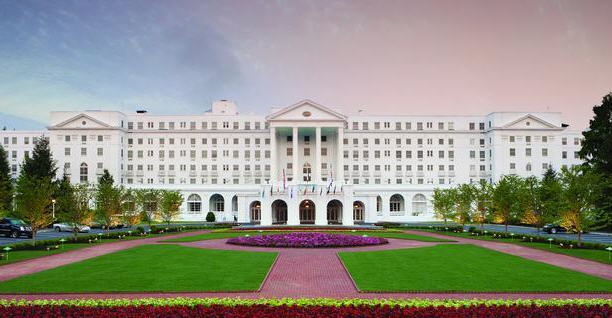
Nestled in the lush landscape of the Allegheny Mountains, The Greenbrier is more than a resort—it is a monument to American grandeur and endurance. Located in West Virginia, the property spans thousands of acres, its pristine lawns, grand architecture, and historic charm drawing travelers from around the world. For over two centuries, The Greenbrier has served as a haven for guests seeking rest, inspiration, and a brush with history.
Its roots stretch back to 1778, when travelers began to flock to the natural sulphur springs believed to have healing properties. What started as a simple retreat for health seekers would, over time, become one of the most famous luxury resorts in the country. Its evolution mirrors that of the United States itself—rich in ambition, resilience, reinvention, and complexity.
II. From Healing Waters to High Society
In its early days, the property was known as White Sulphur Springs. Local settlers and Native Americans alike had long valued the area’s mineral springs, and their reputation eventually spread far beyond the region. Wealthy families from the American South and beyond began visiting each summer to “take the waters” and escape the oppressive heat and illness common along the coast.
Soon, cottages and lodging houses appeared to accommodate growing demand. The resort was not just a place for health but also society—it was where influential families gathered, alliances were formed, and reputations were built. Over the decades, it became one of the South’s most prestigious addresses.
By the 19th century, the site had grown significantly in stature. Prominent figures such as Martin Van Buren, Henry Clay, and countless industrialists and statesmen were among the elite guests. The property’s association with political and social power only grew with time.
III. War, Change, and Reinvention
The Civil War brought chaos and uncertainty. Like much of the South, the resort was caught between Union and Confederate forces. During this period, buildings were damaged, and ownership changed hands multiple times. But following the war, The Greenbrier reopened with renewed purpose. It served as a symbolic meeting point for Northerners and Southerners alike, a venue for reconciliation as much as relaxation.
By the early 20th century, the property entered a new chapter. In 1910, it was acquired by the Chesapeake & Ohio Railway. With direct rail access and growing public interest in leisure travel, the company made sweeping investments. In 1913, a new central hotel building was unveiled—an elegant six-story structure that redefined the resort’s grandeur.
This marked the official birth of “The Greenbrier,” a name that has since become synonymous with sophistication and tradition. Golf courses were added, new wings were built, and amenities expanded. A legendary destination was cemented.
IV. Wartime Shadows and a Hidden Bunker
The onset of World War II would bring another transformation. In 1942, the U.S. government took over the property and converted it into Ashford General Hospital, a massive military medical facility with over 2,000 beds. Over the next four years, nearly 25,000 wounded soldiers were treated there. This chapter of The Greenbrier’s story is often overlooked, yet it reflects its adaptability and service to the nation.
But its most secret role was yet to come.
During the Cold War, the U.S. government secretly built a massive underground bunker beneath the hotel. Known internally as “Project Greek Island,” the facility was designed to serve as an emergency relocation site for Congress in the event of a nuclear attack. It included dormitories, communications rooms, a broadcast studio, and supplies to support hundreds of officials for months.
Remarkably, this enormous complex was kept hidden from the public for over 30 years. It wasn’t until a 1992 exposé by The Washington Post that the bunker’s existence was revealed. Shortly after, the facility was decommissioned. Today, visitors to The Greenbrier can tour the now-declassified space—a surreal glimpse into a world of Cold War paranoia and preparation.
V. A Symbol of Presidential Prestige
Few properties in the world can boast as many presidential visits as The Greenbrier. Since its earliest days, it has played host to 28 U.S. Presidents—from Andrew Jackson to Dwight D. Eisenhower, the last sitting president to stay there. Presidential suites, private dining rooms, and event halls have seen the quiet formation of policy and the subtle dance of diplomacy.
In addition to heads of state, the hotel has welcomed royalty, world leaders, celebrities, and cultural icons. Its guest books read like a who’s who of modern history. But unlike other historic properties, The Greenbrier never simply leaned on its past—it continually evolved to meet the present.
VI. Luxury for the Modern Era
Today, The Greenbrier is a sprawling, multifaceted resort with a bold blend of old-world elegance and contemporary experiences. Guests can stay in one of over 700 rooms or private cottages, dine in more than 20 restaurants and lounges, and explore 11,000 acres of adventure.
The resort features world-class golf—boasting courses designed by legends like Charles Macdonald and Jack Nicklaus—tennis courts, hiking trails, falconry, and even off-road Jeep excursions. Indoors, visitors enjoy a world-class spa, designer boutiques, and immersive culinary experiences. The lavish Casino Club, opened in 2010, offers a refined take on traditional gaming, with a strict dress code and a sense of exclusivity.
Whether visitors come for a weekend or a full vacation, The Greenbrier offers something few destinations can: an escape that feels like a journey through time.
VII. Sports, Medicine, and the Future
In recent years, The Greenbrier has embraced a new identity as a hub for sports and health. The Greenbrier Clinic, founded in 1948, continues to provide high-end executive health services. In 2012, the resort began building the Greenbrier Medical Institute, envisioned as a comprehensive sports medicine and wellness campus.
The resort has also hosted professional sports teams for training camps, including the New Orleans Saints, the Houston Texans, and the New England Patriots. Top-tier athletes appreciate the altitude, seclusion, and state-of-the-art facilities.
Golf remains central to the Greenbrier’s identity. It has hosted major events, including the Ryder Cup, the Solheim Cup, and PGA Tour tournaments. Though its TPC status has since lapsed, the courses remain a major draw.
Even the rise of new sports formats has found a home here—The Greenbrier was a host site for World TeamTennis during the pandemic and served as a venue for The Spring League, a developmental football platform.
VIII. A Touch of Pop Culture and Fiction
The Greenbrier’s mystique has inspired authors, filmmakers, and game developers alike. Its unmistakable appearance and layered history have made it a fixture in fiction. The resort is paralleled in the video game Fallout 76, where the “Whitespring Resort” stands as a post-apocalyptic version of the hotel.
In literature, mystery author Rex Stout set a Nero Wolfe novel in a fictionalized version of the resort. More recently, The Grand Design by Joy Callaway and In the Shadow of the Greenbrier by Emily Matchar have used it as both setting and subject.
Even television has nodded to The Greenbrier. During a celebrity edition of Who Wants to Be a Millionaire, comedian Norm Macdonald faced a million-dollar question about the resort’s secret bunker—a nod to how deeply The Greenbrier is woven into American trivia and lore.
IX. Endurance Amid Challenge
Despite its enduring charm, The Greenbrier has not been immune to hardship. Like many historic institutions, it has weathered financial turbulence, ownership changes, and natural disasters. In 2009, it filed for bankruptcy before being purchased by West Virginia businessman (and later governor) Jim Justice. Justice’s family revived the property, though financial challenges have continued into the 2020s.
When devastating floods struck West Virginia in 2016, The Greenbrier not only closed temporarily but also opened its rooms to displaced families—a testament to its place in the community.
X. More Than a Resort
The Greenbrier isn’t just a place to stay. It’s a living timeline, a mirror of American society through decades of peace, conflict, opulence, and innovation. From a health retreat to a presidential playground, a wartime hospital to a Cold War bunker, and a luxury resort to a training ground for elite athletes, The Greenbrier continues to evolve—without ever losing sight of what makes it special.
For some, it’s the architecture. For others, it’s the golf. For many, it’s the feeling—stepping through the doors into a world where time slows, history speaks, and every corner holds a story.


Map
Sorry, no records were found. Please adjust your search criteria and try again.
Sorry, unable to load the Maps API.