Bunker Soratte


Profile
Bunker Soratte: Italy’s Hidden Underground Fortress
A Secret Military Complex in the Roman Countryside
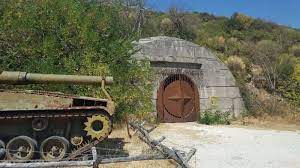
Just 45 kilometers north of Rome lies one of Italy’s most intriguing military relics: Bunker Soratte. Carved deep within Mount Soratte’s limestone heart, this massive underground complex represents a fascinating chapter in Italy’s tumultuous 20th-century history. Originally built to shelter high-ranking Fascist officials during World War II and later repurposed as a Cold War nuclear bunker, this labyrinthine fortress now stands as a powerful memorial to Italy’s complex military past.
From Fascist Origins to Nazi Command Center
Construction began in 1937 under Mussolini’s Fascist regime, with workers laboring in strict secrecy to create an elaborate network of tunnels and chambers within the mountain. By 1943, following Italy’s armistice with the Allies and the subsequent German occupation, the bunker gained new significance. Field Marshal Albert Kesselring commandeered the facility as the Wehrmacht’s Mediterranean headquarters, directing German operations across Italy until Allied advances forced its abandonment in 1944.
During Nazi occupation, German engineers significantly expanded the complex, adding tunnels, reinforcing chambers, and installing sophisticated ventilation, power, and communication systems. The site was designated as a potential refuge for Hitler himself, though he never visited.
An Engineering Marvel
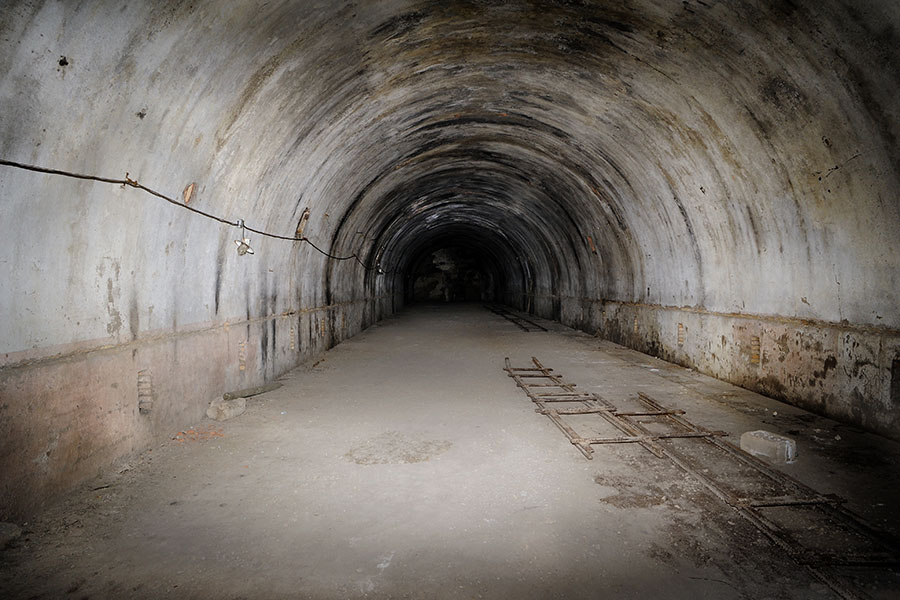
The complex extends approximately 4.5 kilometers through solid limestone, reaching depths of 300 meters below the mountain’s surface. Its main tunnel stretches nearly a kilometer, with numerous side passages housing specialized facilities.
The bunker featured remarkable infrastructure for extended occupation, including:
- Autonomous power generation
- Advanced air filtration systems
- Fresh water collection facilities
- Comprehensive medical facilities
- Extensive living quarters
- Fortified entrances disguised within the landscape
Cold War Transformation
After years of abandonment following WWII, Bunker Soratte found new purpose during the Cold War. In the 1960s, as nuclear tensions escalated, the Italian government and NATO renovated the facility under the code name “Operation Gladio.” The former Nazi headquarters was transformed into a top-secret fallout shelter designed to house key government officials in case of Soviet attack.
The renovated bunker included radiation-resistant materials, NBC filtration systems, hardened telecommunications centers, conference rooms, document storage, and enhanced medical facilities capable of treating radiation exposure. Throughout the Cold War, its existence remained one of Italy’s most closely guarded military secrets.
Layout: An Underground City
Often described as an “underground city,” Bunker Soratte was organized into distinct functional sections:
- Command and Control: Where Kesselring once directed German forces and later where Cold War government continuity operations would be managed
- Living Quarters: Dormitories, dining halls, and recreational spaces for hundreds of personnel
- Technical Infrastructure: Housing power, water, air filtration, and telecommunications systems
- Storage Areas: For food, medicine, fuel, and other essential supplies
- Medical Facilities: Including surgical theaters and specialized radiation treatment areas
- Transportation Network: Wide tunnels and even narrow-gauge railways for moving personnel and equipment
Rediscovery and Preservation
With the Cold War’s end, the bunker was gradually decommissioned and officially closed by 2000. For years it sat abandoned until local historians advocated for its preservation. In 2008, after safety renovations, portions opened to the public for guided tours under management of the “Bunker Soratte Association.”
Living Museum Today
Today, Bunker Soratte functions as a compelling museum of 20th-century military history. Guided tours showcase original equipment, historical photographs, and informative displays covering its evolution from Fascist refuge to Nazi headquarters to Cold War nuclear shelter.
The museum highlights the human dimension of the bunker’s history—from construction workers to military personnel—while educating visitors about Italy’s complex relationship with its wartime past. It has become a popular destination for history enthusiasts and school groups, featured in documentaries and books about secret military installations, and serves as an important economic resource for the surrounding rural community.
This remarkable underground fortress stands as tangible evidence of Italy’s military history, offering valuable insights into how nations prepare for conflict and how military infrastructure adapts to meet evolving threats across decades of geopolitical change.


Map
Sorry, no records were found. Please adjust your search criteria and try again.
Sorry, unable to load the Maps API.